Quantum Computation and Quantum Error Correction
|
Hui-Khoon Ng
NUS, Singapore
3 hour class
(2 lectures of 1.5 hours)
|
 |
 |
Lecture 1: Why quantum computation and where we are
I will give a broad overview of the subject of quantum computation, why people are excited about it, and the rapid push towards realising quantum computing devices.
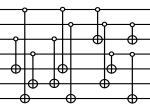
Lecture 2: Quantum error correction - from the 3-qubit repetition code to surface codes
I will demonstrate the basic ideas of quantum error correction, the key approach to removing the effects of noise for accurate quantum computation, using the example of the 3-qubit repetition code. Even though the 3-qubit is very simple, it contains all the crucial features of quantum error correction that more powerful codes rely on. I will explain how one can go from the 3-qubit code to the very well-known surface codes, the current code of choice for quantum computing implementations and the basis of most of the recent experimental demonstrations of quantum error correction.
Superconducting Quantum Circuits
|
Ioan Pop
KIT, Karlsruhe,
Germany
3 hour class
(2 lectures of 1.5 hours)
|
 |
 |
Part 1: Introduction to Superconducting Quantum Circuits
- the Josephson junction
- superconducting qubits: Fluxonium and Transmon
- cQED and qubit readout
- Decoherence T1, T2
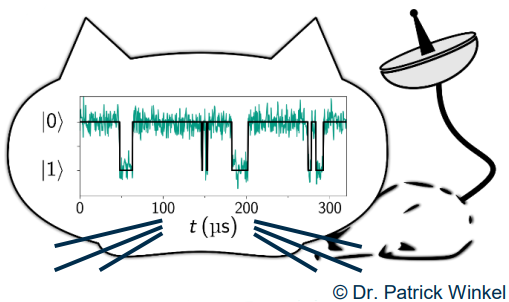
Part 2: The environment memory problem
- materials overview
- decoherence: Achille's heel
- Szilard quantum engine with superconducting qubits
- consequences for quantum error correction
Part 3: Lots of problems to solve, but are there roadblocks?
Quantum Cryptography
|
Ramona Wolf
University of Siegen,
Germany
3 hour class
(2 lectures of 1.5 hours)
|
 |
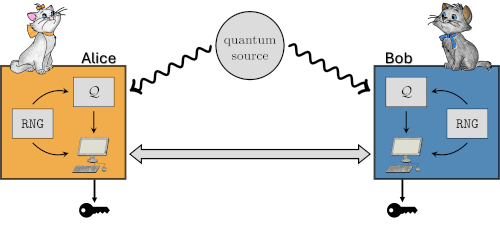 |
Part I: Introduction to Quantum Key Distribution (QKD)
- Goal of QKD
- Quantum mechanical phenomena used in QKD
- General protocol structure
Part II: Security of Quantum Key Distribution
- Security definition
- Security proof structure
- Methods and challenges
Part III: Current topic: Composition of (quantum) communication protocols
- Example/Warning: How the composition of (quantum) communication protocols can compromise security
- What is needed to prevent these problems?
- Challenges for composing quantum with classical protocols
Nanophotonics for quantum technologies
|
Julien Claudon
UGA & CEA
Grenoble (IRIG)
3 hour class
(2 lectures of 1.5 hours)
|
 |
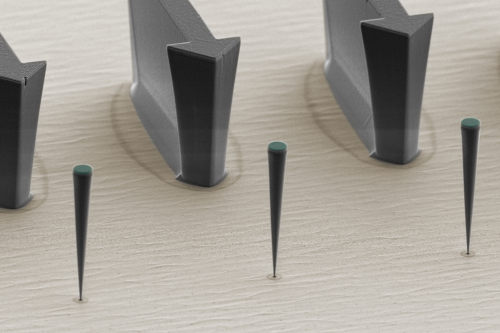 |
Part I: Why and how to encode quantum information on light
- Light = an excellent carrier of information Classical (internet): light pulses, propagating over long distances in optical fibers
- Quantum technologies based on light
- Quantum description of light
- Two fundamentally distinct approaches: “Continuous variables” and “discrete variables” (reminiscent of wave-particle duality)
- Continuous variables:
- Discrete variables (main focus of the lecture)
- A single-photon as a qubit
- A key device: single-photon source. Requirements for an ideal single-photon source
Part II: Real-world single-photon sources
- Non-linear crystal (x^2)
- On-demand sources: Emission of a 2-level system; 1 electronic excitation (Pauli principle) -> 1 photon
- A gallery of solid-state artificial atoms
- A commercial single-photon source: Quandela
- Challenges
- Spontaneous emission in free-space
- The Purcell effect, cavity QED and waveguides
Part III: Open challenges: Single photons and beyond
- Long-haul Q-communications
- Photonic Q-computing
- Heterogeneous integration (III-V source, PIC: SiN platform, detectors: superconducting optical packaging is hard, but progresses)
- Communication between localized nodes: Spin-photon interfaces
Quantum sensing: from discrete to continuous variables approaches
|
Benjamin Pigeau
UGA & CNRS
(Institut Néel, Grenoble)
3 hour class
(2 lectures of 1.5 hours)
|
 |
 |
Introduction
- Theory of measurement
- Signal to noise ratio
- Classical measurement backaction
- Quantum measurement backaction
Continuous variables
- Probing with quantum fields
- The case of opto-mechanics
- The standard quantum limit
- How to beat SQL with Squeezing
- The case of Gravitational wave detectors
Discrete variables
- Two level systems and qubits
- Coupling to external fields
- Qubits manipulation and readout
- The case of solid-state spin qubits
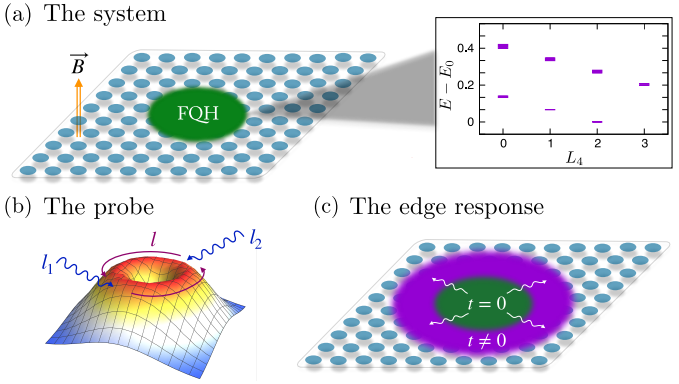
Topological phases in atomic quantum simulators
|
Cécile Repellin
UGA & CNRS
(LPMMC, Grenoble)
3 hour class
(2 lectures of 1.5 hours)
|
 |
 |
I – A few essential concepts of topological physics
Berry phase
Chern number
A simple Chern insulator model
II – Cold atoms as quantum simulators of many-body physics
Optical lattices
Artificial gauge fields - the Harper-Hofstadter model
Bose-Hubbard and Fermi-Hubbard models
III – Fractional quantum Hall effect in ultracold atoms
The fractional quantum Hall effect, a short introduction
Quasi-adiabatic preparation
Measuring the many-body Chern number